For years, researchers in Kenya who needed genomic sequencing had one option: ship samples to labs in Europe, South Africa, or the United States and wait weeks for results. The delays, logistics of international biological material transport, and costs made NGS projects harder than they needed to be.
That has started to change. CA Medlynks now operates a full NGS facility in Nairobi, with Illumina sequencing platforms, library preparation capabilities, and bioinformatics support on site. This article covers what services are available, how the platforms work, and what you need to know to start a project.
What Is Next-Generation Sequencing?
Next-generation sequencing (NGS) refers to high-throughput DNA and RNA sequencing technologies that read millions of fragments in parallel. Unlike Sanger sequencing, which reads one fragment at a time, NGS can sequence an entire human genome in days rather than years.
The technology works by breaking DNA or RNA into short fragments, attaching adaptor sequences, and then reading those fragments simultaneously on a flow cell. Computational tools then assemble the fragments into a complete sequence or map them against a reference genome.
NGS is used across a range of applications:
- Clinical research: identifying genetic variants linked to disease, pharmacogenomics, rare disease diagnosis
- Infectious disease surveillance: tracking pathogen evolution, antimicrobial resistance profiling, outbreak investigation
- Cancer genomics: tumour profiling, identification of actionable mutations, monitoring treatment response
- Agricultural and environmental genomics: crop improvement, biodiversity studies, soil metagenomics
The common thread is that all of these applications require high-throughput, accurate sequencing at a cost per base that makes large-scale projects feasible. That is what NGS delivers.
These applications rarely stand alone in practice. NGS-based tumour profiling, for example, sits at the end of a pathology pipeline that begins with tissue processing and H&E staining and moves through immunohistochemistry and PCR before sequencing is reached. Our guide to histopathology services in Kenya, from tissue processing to NGS-based cancer diagnostics, sets out how those stages connect.
NGS Services Available
CA Medlynks offers a range of sequencing services through its research and genomics division. Each service is suited to different research questions and sample types. The table below summarises how they differ.
| Service | What is sequenced | Main uses | Best when |
|---|---|---|---|
| Whole genome sequencing (WGS) | The entire genome, coding and non-coding | Population genetics, structural variant detection, de novo assembly | You need complete genomic information |
| Whole exome sequencing (WES) | The exome, roughly 1-2% of the genome | Variant analysis in protein-coding regions | Your question is about coding mutations |
| Clinical exome sequencing | Genes of known clinical significance | Identification of pathogenic variants | The setting is diagnostic |
| RNA sequencing (RNA-Seq) | The transcriptome | Differential expression, novel transcripts, alternative splicing | You need to know what the genome is actually doing |
| Metagenomics | All genetic material in a sample | Microbial community analysis, pathogen identification | You need to analyse a mixed sample without culturing |
| Targeted sequencing | Specific regions, via panels or custom capture probes | High-depth detection of low-frequency variants | You already know which genes matter |
| Run-only sequencing | Libraries you prepare yourself | Sequencing run and primary data processing only | Your lab already prepares its own libraries |
Scroll the table horizontally to see all columns.
Whole Genome Sequencing (WGS)
WGS reads the entire genome of an organism, including coding and non-coding regions. It is the most comprehensive sequencing approach and is used when you need complete genomic information. Applications include population genetics, structural variant detection, and de novo genome assembly.
Whole Exome Sequencing (WES)
WES targets only the protein-coding regions of the genome (the exome), which represent about 1-2% of the total genome. The exome is commonly estimated to contain around 85% of the mutations identified in Mendelian disease, which is why WES is more cost-effective than WGS when your research question focuses on coding mutations.
RNA Sequencing / Transcriptomics
RNA-Seq measures gene expression levels across the entire transcriptome. It is used to identify differentially expressed genes, discover novel transcripts, and study alternative splicing. Researchers working on drug response, developmental biology, or disease mechanisms use RNA-Seq to understand what the genome is actually doing in specific tissues or conditions.
Clinical Exome Sequencing
Clinical exome sequencing is a targeted approach designed for diagnostic settings. It focuses on genes with known clinical significance and is used to identify pathogenic variants in patients with suspected genetic disorders. Results are interpreted against curated databases of clinically relevant variants.
Metagenomics Analysis
Metagenomics sequences all genetic material in an environmental or clinical sample without prior culturing. This is particularly useful for studying complex microbial communities, identifying pathogens in mixed samples, and characterising the microbiome. Applications range from gut microbiome research to environmental monitoring and food safety.
Targeted Sequencing
Targeted sequencing uses gene panels or custom capture probes to sequence specific regions of interest at very high depth. This approach is cost-effective when you know which genes or regions you want to examine and need deep coverage to detect low-frequency variants. Cancer gene panels and pharmacogenomics panels are common examples.
Run-Only Sequencing
For labs that have their own library preparation capabilities, CA Medlynks offers run-only sequencing. You prepare and quality-check your libraries in-house, then bring them to us for sequencing on our Illumina platforms. This is the most cost-effective option for institutions with established wet-lab workflows. We handle the sequencing run, primary data processing, and data delivery.
Platforms and Equipment
CA Medlynks operates two Illumina sequencing platforms, each suited to different project scales.
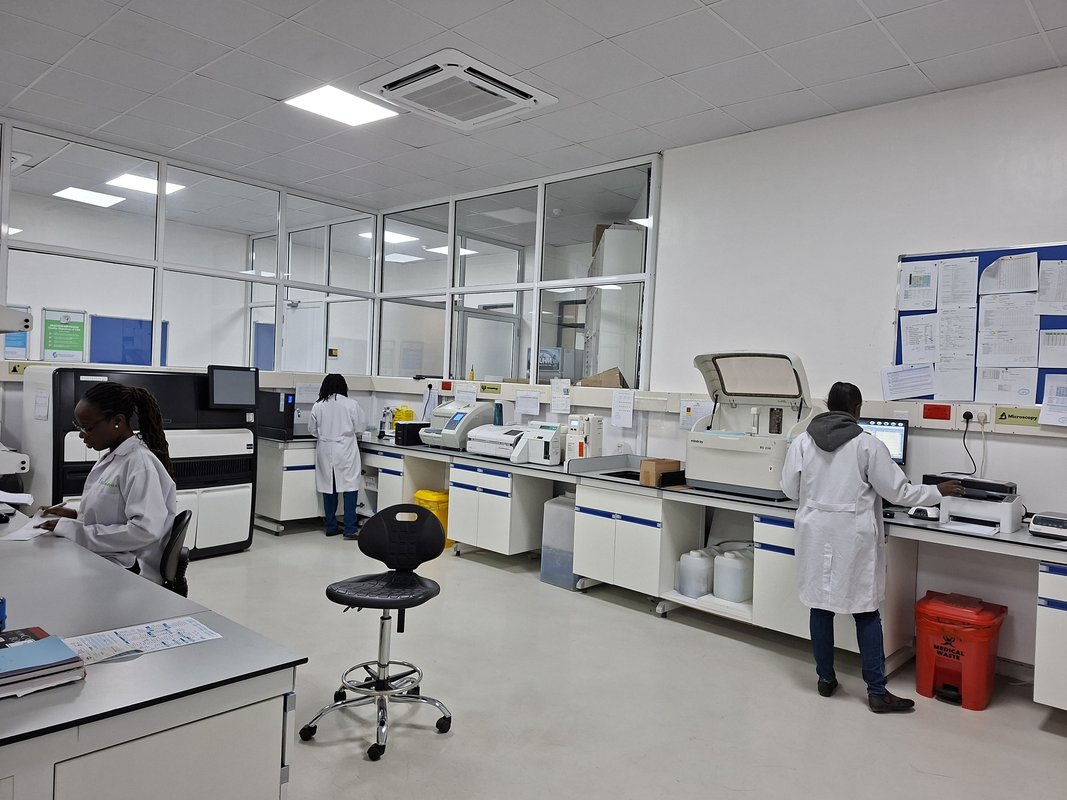
Illumina NextSeq 1000
The NextSeq 1000 is the primary high-throughput platform. It supports multiple flow cell configurations and can generate up to 120 Gb of data per run. This makes it suitable for whole genome sequencing, large RNA-Seq experiments, and projects requiring deep coverage across many samples. The platform uses Illumina's XLEAP-SBS chemistry for high accuracy.
Illumina iSeq 100
The iSeq 100 is a benchtop sequencer designed for smaller-scale projects, quality control runs, and targeted sequencing applications. It is well-suited for amplicon sequencing, small gene panels, and library validation before committing to a full NextSeq run. Its lower per-run cost makes it practical for pilot experiments and method development.
Between these two platforms, the lab can handle projects ranging from single-gene targeted panels to full human genome sequencing. The research team works with you to determine which platform and configuration best fits your project's requirements and budget.
Bioinformatics Support
Raw sequencing data is only the starting point. Converting millions of short reads into meaningful biological results requires bioinformatics analysis. CA Medlynks provides this as part of the service or as a standalone offering.
Available bioinformatics services include:
- Variant calling: using GATK, FreeBayes, and other validated pipelines to identify SNPs, indels, and structural variants
- Genome assembly: de novo and reference-guided assembly for novel organisms or strains
- Gene expression analysis: differential expression, pathway enrichment, and functional annotation from RNA-Seq data
- Metagenomic profiling: taxonomic classification, diversity analysis, and functional prediction from metagenomic datasets
- Custom pipelines: tailored analysis workflows for specific research questions or non-standard data types
The bioinformatics team works directly with researchers to define analysis parameters, validate results, and deliver data in formats ready for publication or further analysis. If your institution has its own bioinformatics capacity, you can opt for data delivery only and run your own pipelines.
Co-Working Laboratory Space
CA Medlynks offers co-working laboratory space for researchers and institutions that need access to NGS equipment and infrastructure without building their own facility.
The co-working arrangement includes:
- Access to wet lab bench space for library preparation and sample processing
- Use of NGS equipment (NextSeq 1000, iSeq 100) with technical support
- Bioinformatics workstations for data analysis
- Shared reagent storage and cold chain facilities
Both short-term arrangements (for specific projects or visiting researchers) and long-term agreements (for institutions building genomics capacity) are available. This model is particularly useful for university research groups, international collaborations that need a Nairobi-based lab partner, and organisations running time-limited projects funded by research grants.
The lab is KENAS-accredited to ISO 15189:2022 standards, which matters for research that requires documented quality management systems. ISO 15189 is the standard the Kenya Accreditation Service applies to medical laboratories, covering technical competence and quality management across the whole testing process.
Why Sequence Locally?
Sending samples abroad for sequencing works, but it comes with trade-offs that local sequencing eliminates.
- Turnaround time: International shipping, customs clearance, and queue times at overseas labs can add 4 to 8 weeks to a project. Local sequencing cuts this to days.
- Shipping logistics: Biological materials require cold chain maintenance, export permits, and compliance with international transport regulations (IATA Dangerous Goods). Sequencing locally removes this entire layer of complexity.
- Coordination: Working with a lab in the same time zone simplifies communication. You can visit the facility, discuss results in person, and troubleshoot issues without scheduling calls at odd hours.
- Cost structure: While per-base sequencing costs may be comparable, the total project cost drops when you eliminate international shipping fees, import duties on reagents, and the overhead of managing cross-border logistics.
- African genomic research capacity: The more sequencing that happens on the continent, the more African genomes are represented in global reference databases. This matters for variant interpretation, population-specific studies, and building a research workforce with hands-on NGS experience. It is the same rationale behind pan-African initiatives such as H3Africa (Human Heredity and Health in Africa), which set out to build genomics capacity and infrastructure across the continent.
None of this means overseas sequencing is wrong. For some applications, specialised facilities abroad remain the best choice. But for many projects, local sequencing is now a viable and often better option.
How to Get Started
Starting an NGS project at CA Medlynks follows a straightforward process:
- Contact the research team: Reach out via WhatsApp (+254 741 669 175) or email (customercare@camedlynks.com) with a brief description of your project.
- Discuss project requirements: The team will review your sample type, number of samples, sequencing depth needed, and analysis requirements. They will recommend the appropriate platform and service.
- Receive a quote: Pricing is project-specific because sequencing costs depend on coverage depth, number of samples, library preparation requirements, and bioinformatics analysis scope. You will receive a detailed quote before committing.
- Sample submission: Once confirmed, submit your samples following the lab's guidelines for DNA/RNA quality, quantity, and shipping conditions.
- Sequencing and analysis: The lab runs your samples and delivers data plus any agreed bioinformatics analysis.
For more details on the research services available, visit the Research & NGS service page. If your project also involves histopathology or tissue-based studies, the lab can coordinate both workflows. The same molecular laboratory also handles clinical DNA work outside the research context, including DNA and paternity testing in Nairobi.
Meet Our Medical Team
This article has been reviewed by the CA Medlynks laboratory team for accuracy of the platform specifications and service descriptions. The laboratory is KENAS-accredited to ISO 15189:2022.
Dr. Paul Yonga
Medical Director & Infectious Disease Specialist- MBChB — Bachelor of Medicine & Surgery
- MSPH — Master of Science in Public Health
- FRCP (Edin) — Fellow of the Royal College of Physicians of Edinburgh
- Travel Medicine & Tropical Diseases
- Infectious Diseases Management
Dr. Duncan Ajowi
Consultant Obstetrician & Gynaecologist- Master of Medicine (MMed), Obstetrics & Gynaecology — University of Nairobi
- Diploma in Laparoscopic Surgery — Henrob Hospital, Uganda
- High-Risk Pregnancy Care & Screening
- Fertility Evaluation & Infection Management
- Gynaecologic Cancer Screening & Preventive Care
Frequently Asked Questions
What NGS platforms do you use?
Illumina NextSeq 1000 and iSeq 100. The NextSeq 1000 handles high-throughput projects like whole genome sequencing and large RNA-Seq experiments. The iSeq 100 is used for smaller-scale work, targeted panels, and library quality control.
Can I bring my own library for sequencing?
Yes. We offer run-only sequencing where you provide pre-made libraries and we handle the sequencing. This is a cost-effective option for labs that have their own library preparation setup. We will run QC on your libraries before loading them onto the sequencer.
Do you provide bioinformatics support?
Yes. We offer variant calling (using GATK, FreeBayes, and other tools), genome assembly, gene expression analysis, and custom pipelines. You can also opt for raw data delivery if you prefer to run your own analysis.
Is co-working lab space available?
Yes. We offer co-working laboratory space with access to NGS equipment and bioinformatics workstations. Both short-term (project-based) and long-term arrangements are available. This works well for visiting researchers, university groups, and organisations that need lab access without building their own facility.
How do I get a quote for NGS services?
Contact us via WhatsApp or email with your project details: sample type, number of samples, sequencing depth, and analysis needs. We provide customised quotes for each project.
How much does NGS cost in Kenya?
There is no single list price, because sequencing cost is driven by four things: the sequencing depth or coverage you need, the number of samples in the project, whether you need library preparation or are supplying your own libraries, and how much bioinformatics analysis is included. Deep coverage on a large genome costs more per sample than a targeted panel; run-only sequencing costs less than a full library-prep-to-analysis workflow. Send the research team those four parameters and you will receive an itemised quote before you commit.
What is the turnaround time for NGS at CA Medlynks?
Turnaround depends on the platform, the run configuration, and the scope of bioinformatics analysis. The main difference from sending samples overseas is that international shipping, customs clearance, and queue times at overseas labs typically add four to eight weeks to a project, and sequencing in Nairobi removes that. Contact the research team for a project-specific timeline before you plan around a deadline.
What are the sample requirements for NGS?
Requirements differ by application and sample type. In every case the lab needs enough material, at sufficient purity and integrity, stored and transported under the right conditions. Written sample submission guidelines covering minimum quantity, purity and integrity thresholds, and storage conditions are issued for your specific sample type once the project is confirmed. Ask the research team for the relevant guideline sheet before you collect or extract.
Who owns the sequencing data, and how is it delivered?
Data ownership, delivery format, and retention period are set out in writing in your project agreement before sequencing begins, so that there is no ambiguity about who controls the data. Confirm the terms that apply to your project with the research team at the quotation stage, particularly if your funder or ethics approval imposes conditions on data custody or sharing.