Sexually transmitted infections (STIs) remain a significant public health concern in Kenya, with Nairobi being one of the most affected regions. As of 2024, Kenya's national HIV prevalence stands at 3.3%, with a notable gender disparity: 4.5% among women compared to 2.2% among men, representing approximately 1.33 million people living with HIV nationwide. Beyond HIV, chlamydia is the most prevalent STI in the country, with a pooled prevalence of 5.8% — rising to 14.8% among women over 25, and 13% among women seeking family planning services in Nairobi. Whether you are experiencing symptoms or simply want peace of mind, getting tested is one of the most responsible steps you can take for your own health and the well-being of your partners. This guide covers everything you need to know about STI testing in Nairobi, from the types of tests available to how to prepare for your appointment.

Why Regular STI Testing Matters

Many STIs, including chlamydia, gonorrhoea, and even HIV, can remain asymptomatic for weeks, months, or even years. During that time, you could unknowingly transmit the infection to sexual partners. Regular testing allows for early detection, which leads to more effective treatment outcomes and helps break the chain of transmission. This is especially important given that Kenya adopted syndromic STI management in 1990, an approach that treats patients based on symptoms rather than laboratory diagnosis. A key limitation of this approach is that it misses asymptomatic infections — particularly chlamydia in women, which often presents no symptoms at all.

The Kenya Ministry of Health recommends that sexually active adults get tested at least once a year, and more frequently if they have multiple partners or engage in unprotected sex. Kenya recorded 16,752 new HIV infections in 2023, with 39% occurring among adolescents aged 15–24. Early detection through professional STI testing is the foundation of effective treatment. On a positive note, Kenya has reached 96-98-97 against the WHO 95-95-95 HIV targets — meaning 96% of people living with HIV know their status, 98% of those diagnosed are on treatment, and 97% of those on treatment are virally suppressed. Kenya is one of only seven African countries to have achieved this milestone.

Common STIs Tested for in Nairobi

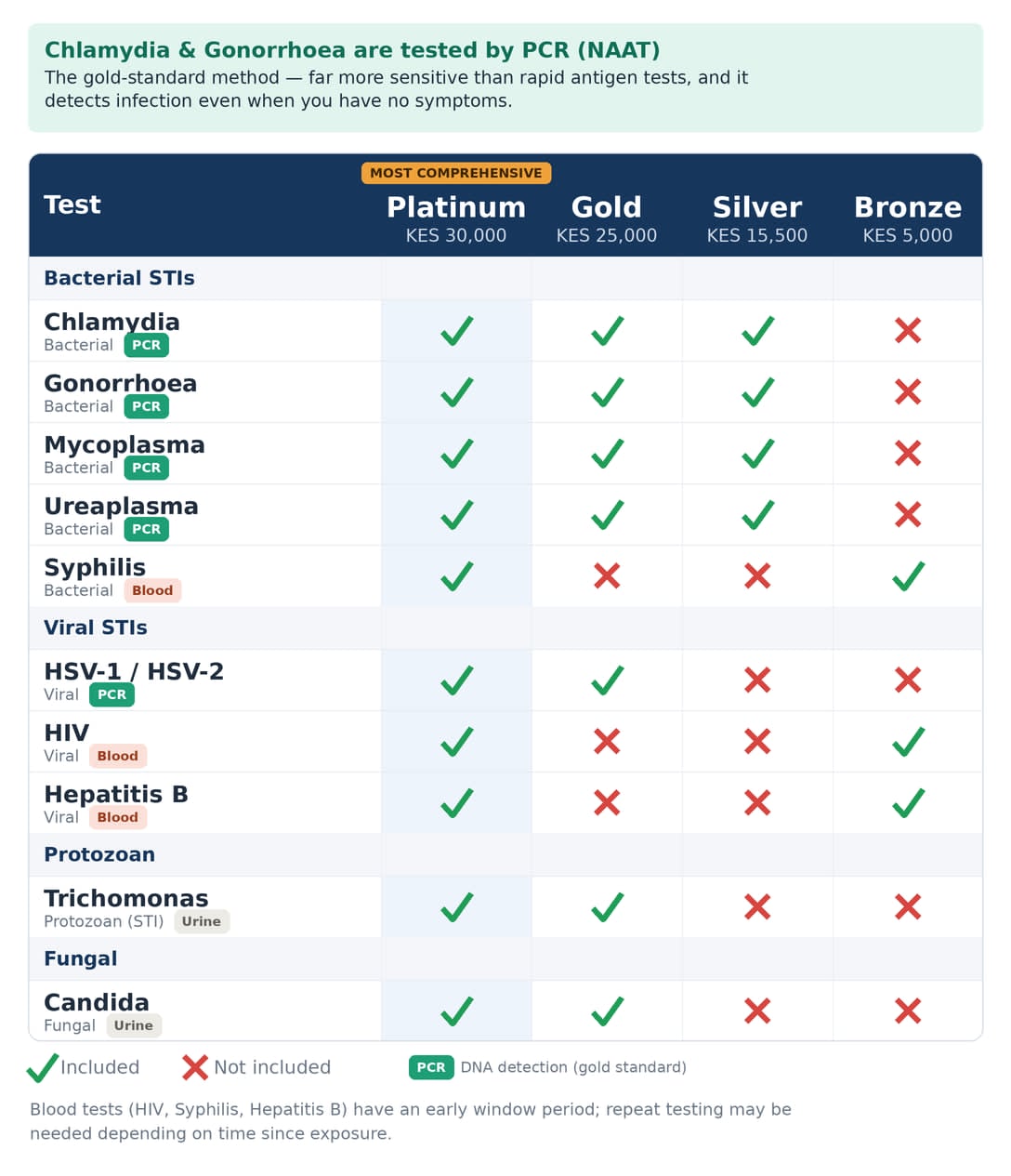
At a comprehensive sexual health clinic like CA Medlynks, you can be tested for a wide range of infections. The most commonly screened STIs include:

  • HIV (Human Immunodeficiency Virus) – Rapid and confirmatory tests are available, with results often ready within minutes for rapid tests.
  • Syphilis – Detected through blood tests such as RPR and TPHA.
  • Gonorrhoea – Diagnosed through urine samples or swabs, with culture and sensitivity testing available.
  • Chlamydia – Often tested alongside gonorrhoea using a combined nucleic acid amplification test (NAAT). With a 5.8% pooled national prevalence — the highest of any STI in Kenya — laboratory-based testing is essential, as syndromic management frequently misses asymptomatic cases.
  • Trichomoniasis – A parasitic infection that is especially common among HIV-positive women, with a prevalence of 10.9% in this group. Often overlooked, it increases the risk of HIV transmission.
  • Hepatitis B and C – Blood tests that screen for both active infections and immunity status.
  • Herpes Simplex Virus (HSV) – Type-specific antibody tests can distinguish between HSV-1 and HSV-2.
  • Human Papillomavirus (HPV) – Typically screened through Pap smears or HPV DNA testing for women.

Types of STI Tests Available

Blood Tests

Blood samples are used to test for HIV, syphilis, hepatitis B, hepatitis C, and herpes. A small sample is drawn from your arm, and results are typically available within 24 to 48 hours for standard tests. Rapid HIV tests can deliver results in as little as 15 minutes.

Urine Tests

Urine samples are commonly used to screen for chlamydia and gonorrhoea. This is a non-invasive and straightforward testing method. You may be asked to avoid urinating for at least one hour before providing the sample to ensure accurate results.

Swab Tests

Swabs may be taken from the throat, genital area, or rectum depending on your sexual history and symptoms. These are particularly useful for detecting gonorrhoea, chlamydia, and herpes in specific anatomical sites.

Molecular and PCR Testing

For highly accurate results, CA Medlynks offers polymerase chain reaction (PCR) testing that detects the genetic material of pathogens. This is particularly valuable for early detection of HIV (during the window period) and for confirming diagnoses where standard tests may be inconclusive. As a KENAS-accredited laboratory, we use state-of-the-art molecular diagnostic equipment.

How to Prepare for Your STI Test

Preparing for an STI test is straightforward. Here are a few tips to ensure the most accurate results:

  1. Avoid urinating for at least one hour before a urine test.
  2. Abstain from antibiotics for at least 7 days before testing, unless directed otherwise by a doctor, as they may interfere with bacterial cultures.
  3. Be honest with your healthcare provider about your sexual history, number of partners, and any symptoms you have noticed.
  4. Fasting is not required for most STI blood tests, though it may be recommended if additional tests like a lipid panel are being performed simultaneously.
  5. Bring identification and any previous test results if available.

What to Expect During Your Visit

At CA Medlynks, we prioritise patient comfort and confidentiality. When you arrive at our clinic on the ground floor of Daykio Plaza, off Ngong Lane, you will be greeted by our reception staff and guided through the process.

A healthcare professional will discuss your sexual health history in a private consultation room. Based on this conversation, they will recommend the appropriate tests. Sample collection is quick and usually takes no more than 10 to 15 minutes.

All results are handled with strict confidentiality. You can choose to receive them in person, via a secure patient portal, or over a private phone consultation.

Understanding Your Results

Most STI test results are available within 24 to 72 hours, depending on the type of test. Rapid HIV tests provide results on the same day. If any result comes back positive, our medical team will explain the diagnosis, discuss treatment options, and provide guidance on notifying partners.

Early detection of STIs leads to better treatment outcomes. Many common STIs, including chlamydia, gonorrhoea, and syphilis, are fully curable with the right antibiotics when caught early.

STI Treatment: What to Expect

Most bacterial STIs are fully curable with a course of antibiotics. Here is what treatment looks like for common infections:

  • Syphilis treatment: Primary and secondary syphilis are treated with a single intramuscular injection of benzathine penicillin G. Late-stage syphilis requires three weekly injections. Treatment is safe, affordable, and highly effective when started early.
  • Chlamydia and gonorrhoea: Treated with a short course of oral antibiotics. Dual therapy (azithromycin + ceftriaxone) is standard for gonorrhoea due to rising antibiotic resistance.
  • Mycoplasma genitalium: Requires targeted antibiotics guided by resistance testing. PCR testing is recommended before treatment to identify the right medication.
  • Herpes (HSV): Not curable but manageable with antiviral medication (acyclovir or valacyclovir) to reduce outbreak frequency and severity.
  • HIV: Not curable but effectively managed with antiretroviral therapy (ART). Early detection and treatment allows people with HIV to live long, healthy lives with an undetectable viral load.

At CA Medlynks, if your test comes back positive, our medical team will discuss treatment options with you on the same day. We provide prescriptions and can arrange follow-up testing to confirm the infection has cleared.

Confidentiality and Privacy

We understand that STI testing can feel sensitive. In Kenya, cultural barriers continue to hinder STI prevention: traditional masculinity norms often discourage men from seeking testing or participating in contact tracing, while high levels of stigma around STIs prevent open conversations and timely treatment. CA Medlynks adheres to strict medical confidentiality standards specifically designed to address these challenges. Your results will never be shared with third parties without your explicit written consent. Our staff are trained to provide a non-judgmental, supportive environment for every patient.

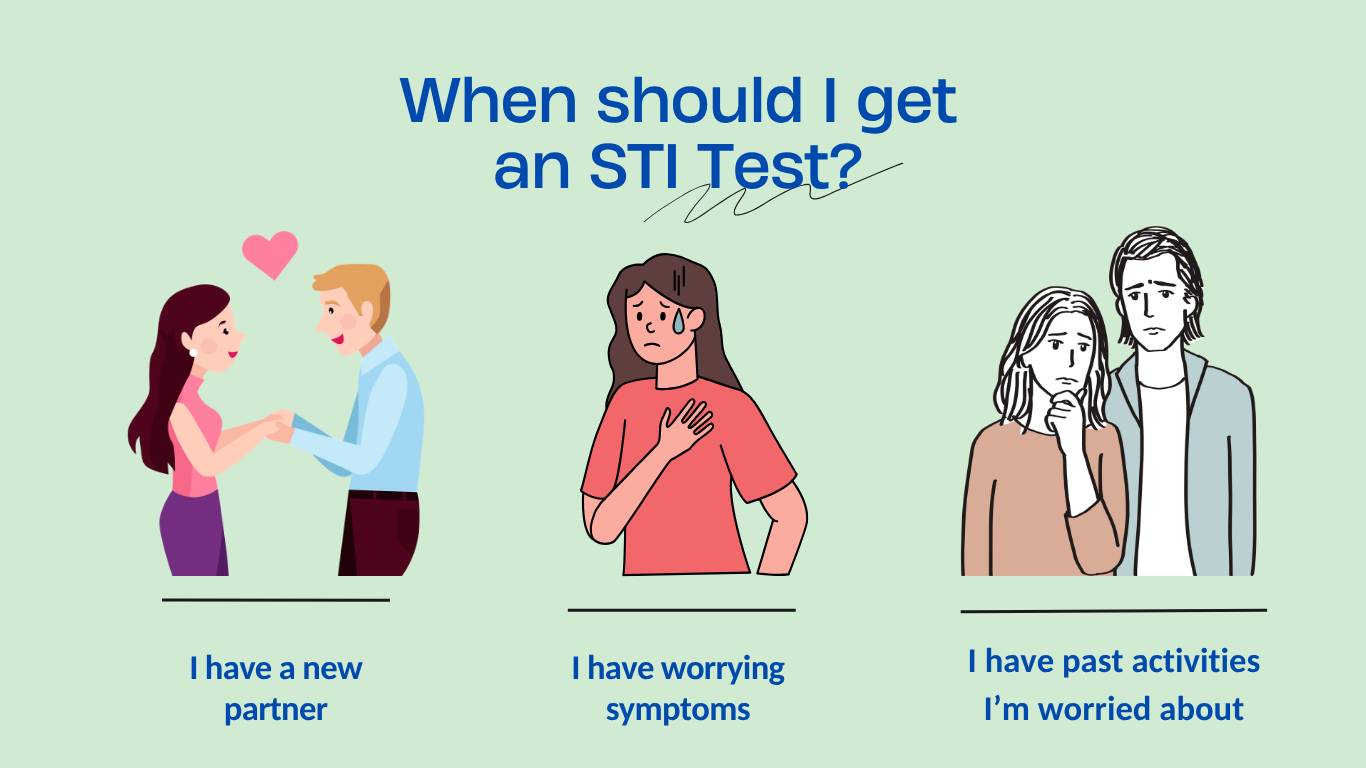
When to Get Tested

You should consider getting an STI test if:

  • You are starting a new sexual relationship
  • You have had unprotected sex
  • You or your partner have multiple sexual partners
  • You are experiencing symptoms such as unusual discharge, sores, itching, or pain during urination
  • You are pregnant or planning a pregnancy
  • You have been notified that a previous partner has tested positive for an STI
  • It has been more than 12 months since your last test

Book Your STI Test at CA Medlynks

Taking control of your sexual health starts with getting tested. At CA Medlynks, we offer comprehensive STI and HIV testing services in a confidential, professional setting. Our KENAS-accredited laboratory ensures you receive accurate, reliable results using the latest diagnostic technology. Unlike public facilities that sometimes experience STI drug stock-outs, we maintain a consistent supply chain for both diagnostics and treatment.

Under Kenya's Social Health Authority (SHA), which replaced the NHIF on 1 October 2024, the Primary Healthcare Fund now covers basic diagnostic tests for all citizens regardless of contribution status — making testing more accessible than ever. Whether you need a routine screening or have specific concerns, our experienced medical team is here to support you every step of the way. Visit us at Daykio Plaza, Nairobi, or reach out to schedule your appointment today.